Wednesday, October 29, 2014

Kumbaya Chord Lead Sheet

Kumbaya Chord Sheet

  D               G     D
1. Kumbaya my Lord, kumba ya!
D            G     A
Kumbaya my Lord, kumba ya!
    D           G     D
Kumbaya my Lord, kumbaya!
G D     A     D     
O Lord, kumba ya!

  D                     G       D
2. Hear me crying, Lord, kum bay ya;
D                  G       A
Hear me crying, Lord, kum bay ya;
        D             G       D
Hear me crying, Lord, kum bay ya,
G D     A       D     
O Lord, kum bay ya.

  D                     G       D
3. Hear me singing, Lord, kum bay ya;
4. Hear me praying, Lord, kum bay ya;
5. Oh, I need you, Lord, kum bay ya;
D                     G       A
Hear me singing, Lord, kum bay ya;
        D              G       D
Hear me singing, Lord, kum bay ya,
G D     A       D     
O Lord, kum bay ya.

"Kumbaya" or "Kumbayah" or "Cumbaya" (Gullah, "Come By Here" — "Kum ba yah") — is a spiritual song first recorded in the 1920s.  enjoyed broad popularity as a hit song during the folk revival of the 1950s and 1960s. Sometimes credited to Africa or a white minister, it is most likely from Africla Americans in  Creole language spoken by the former slaves living in the Islands of South Carolina and Georgia before modern Gospel, soul, rock or rap.

Sunday, October 26, 2014

This Land Woodie Guthrie Chords And Lyrics


Chorus
    D            G                       D
    This land is your land, this land is my land,
             A7                     D
    From California to the New York Island,
                     G                          D
    From the Redwood Forests to the Gulf Stream waters;
    A7                             D
    This land was made for you and me.
 D        G                      D
V1 As I was walking that ribbon of highway,
        A7                     D
I looked above me, there in the skyway,
       G                  D
I saw below me, the Golden Valley;
A7                             D
This land was made for you and me.
  D            G                        D
V2 I roamed and rambled, and followed my footsteps
                     A7                   D
Through the sparkling sands of her diamond deserts,
        G                        D
And all around me this voice kept saying,
A7                             D
"This land was made for you and me."
  D              G                  D
V3 As the Sun was shining, and I was strolling
                        A7                         D
Through the wheat fields waving and the dust clouds rolling,
               G                    D
I could feel in side me and see all around me,

A7                             D
This land was made for you and me.

Tuesday, October 21, 2014

The Minds Eye VHS 90s Computer Graphics


Now on youtube. Bought this to see the stuff I had to see at SIGGRAPH computer geek conferences and played it for my kids when they were little


Beyond the Mind's Eye
 

Friday, October 3, 2014

Economist: Why so many Kims in Korea

Economist: Why so many Kims in Korea

The top 3 names, Kim, Lee or Park account for almost half of those in use in South Korea today compared to 100 common Chinese or 280,000 distinct Japanese names.

http://www.economist.com/blogs/economist-explains/2014/09/economist-explains-5

A SOUTH KOREAN saying claims that a stone thrown from the top of Mount Namsan, in the centre of the capital Seoul, is bound to hit a person with the surname Kim or Lee. One in every five South Koreans is a Kim—in a population of just over 50m. And from the current president, Park Geun-hye, to rapper PSY (born Park Jae-sang), almost one in ten is a Park. Taken together, these three surnames account for almost half of those in use in South Korea today. Neighbouring China has around 100 surnames in common usage; Japan may have as many as 280,000 distinct family names. Why is there so little diversity in Korean surnames?

...As family names such as Lee and Kim were among those used by royalty in ancient Korea, they were preferred by provincial elites and, later, commoners when plumping for a last name. This small pool of names originated from China, adopted by the Korean court and its nobility in the 7th century in emulation of noble-sounding Chinese surnames. (Many Korean surnames are formed from a single Chinese character.) So, to distinguish one’s lineage from those of others with the same surname, the place of origin of a given clan (bongwan) was often tagged onto the name. Kims have around 300 distinct regional origins, such as the Gyeongju Kim and Gimhae Kim clans (though the origin often goes unidentified except on official documents). The limited pot of names meant that no one was quite sure who was a blood relation; so, in the late Joseon period, the king enforced a ban on marriages between people with identical bongwan (a restriction that was only lifted in 1997)....

Management Innovation In The New China

Management Innovation In The New China

The economist has this depressing look at China's business prospects, but leads to an article about some real Chinese style innovations

“Having worked in Chinese enterprises I can say that they are badly managed, are decaying from political infighting and they cook the numbers on everything imaginable. I used to think China would pose a challenge to Western firms’ dominance until I saw how they operated.”—on “The China wave”, September 13th 2014

http://www.economist.com/news/business/21616974-chinese-management-ideas-are-beginning-get-attention-they-deserve-china-wave

it seems unlikely that China’s companies have come as far as they have just by applying lots of labour and capital. It is also hard to imagine that the huge expansion of China’s education system and its technology industries is not producing fresh management thinking. Western companies knew little about Japan’s system of lean production until its carmakers gobbled up their markets. The danger is that the same will happen with Chinese management ideas.

There are, however, signs that these are now getting the attention they deserve. The MIT Sloan Management Review devotes much of its current issue to examining innovation and management lessons from China. Peter Williamson and Eden Yin of Cambridge University’s Judge Business School contribute a fascinating essay on “Accelerated Innovation: the New Challenge from China”. The latest issue of the Harvard Business Review has a piece on “A Chinese Approach to Management” by Thomas Hout of the Monterey Institute of International Studies and David Michael of the Boston Consulting Group.

... the Chinese, like the post-war Japanese, have been doing a great deal of innovation under the radar. The second demonstrates that they are becoming more creative as they seek to solve the problems of a rapidly advancing consumer economy.

Thursday, September 18, 2014

Half Scale Sit-Inside Plymouth Superbird Model Car

really big hot wheels car. Like those ride-on trains but you ride inside this one

At first glance, we thought this 1970 Plymouth Superbird was cool of coursre, but nothing special – that is, until we saw it drive by other cars and realized that it was a fully functional half-size car making its way through the fairgrounds of a car show....
AMERICALOVESHORSEPOWER.COM

Tuesday, September 9, 2014

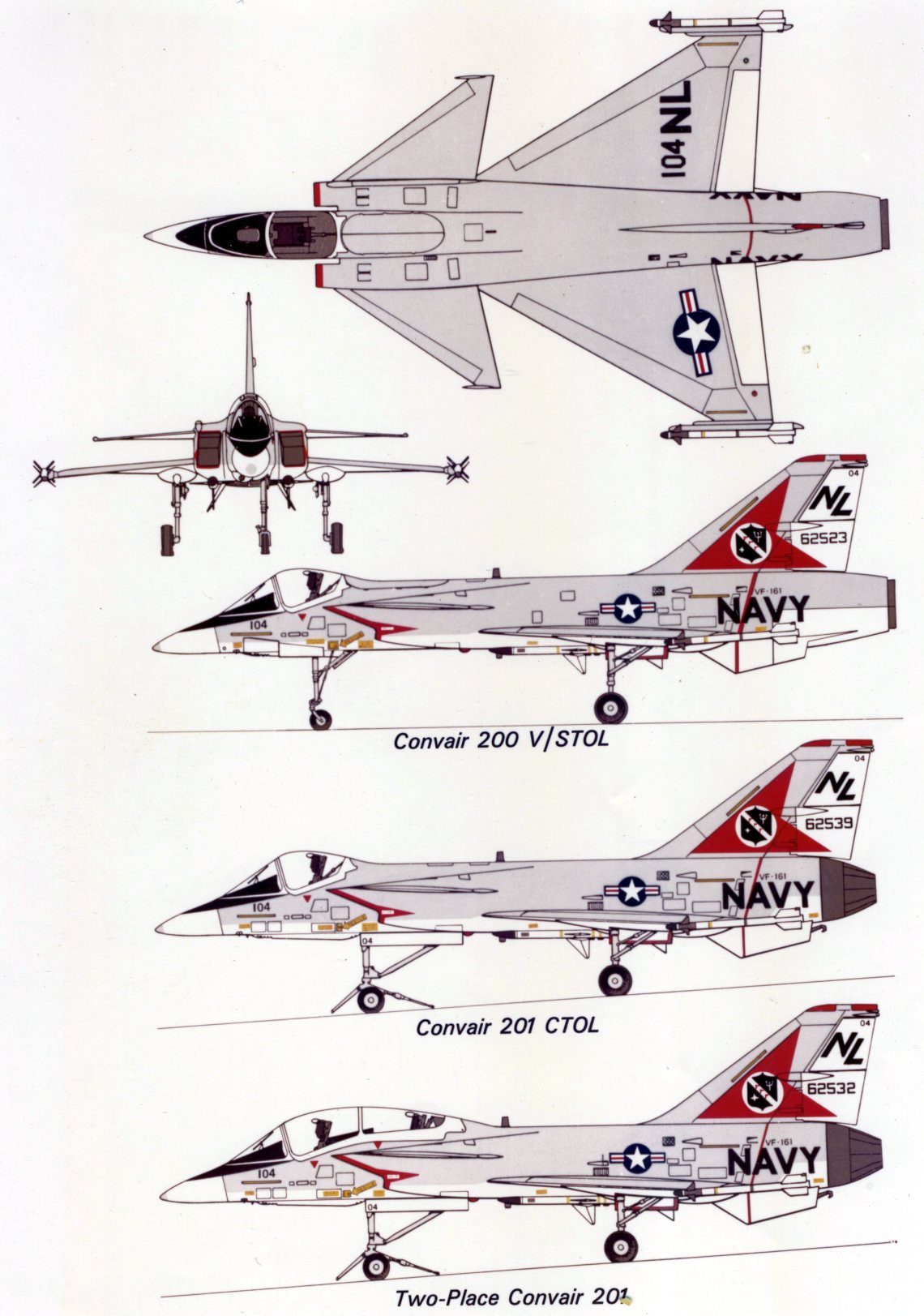
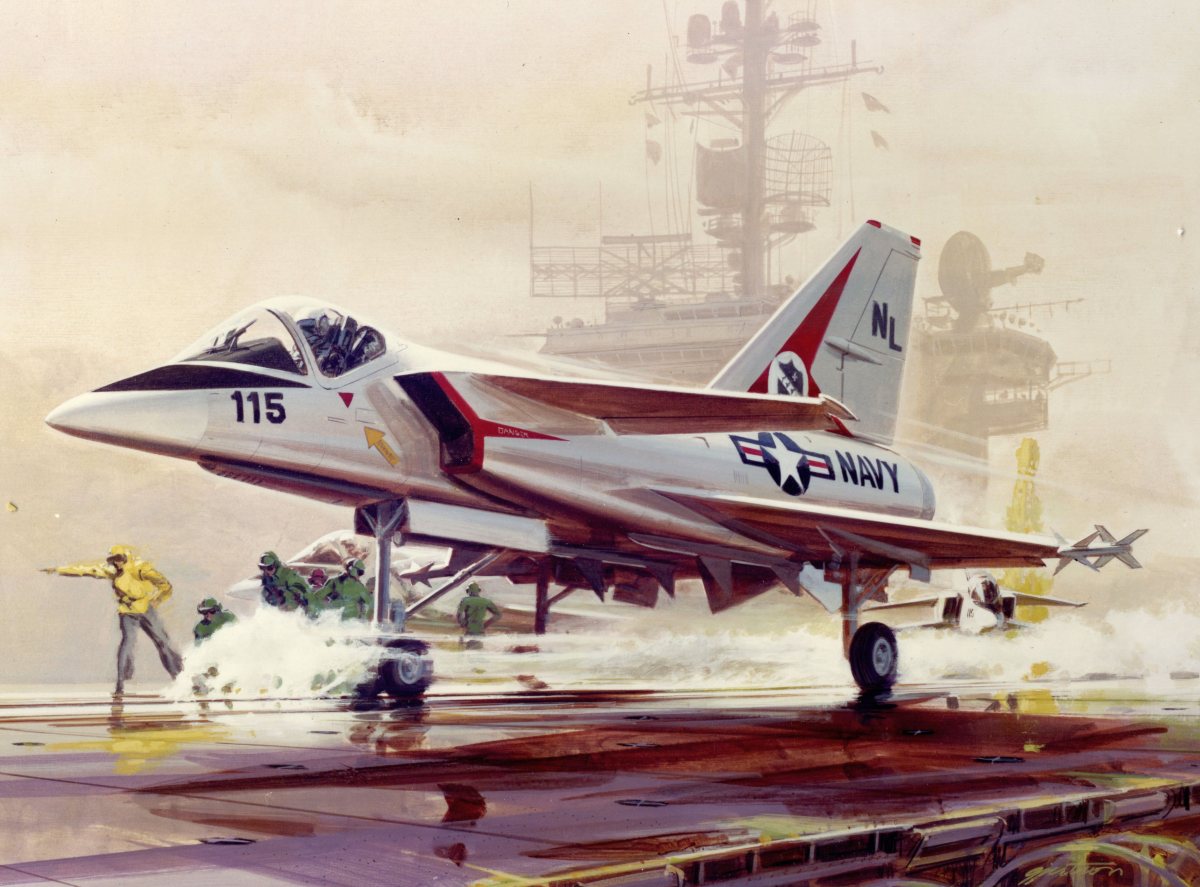
Convair Model 200 Supersonic VTOL Sea Control Ship Fighter Concept

Convair Model 200 Supersonic VTOL Sea Control Ship Fighter Concept [edit]


This design from the late 60s/ early 70s looks a lot like the latest european fighters that use delta/canard configurations. It used the idea of lift engines behind the cockpit with a swiveling tailpipe, but no prototype was built as the contract went to the weird window-blind wing XFV-12 which somehow managed to take an engine with more thrust than flying weight, and never generate enough lift to get off the ground. Convair at the time made a number of delta-wing fighters and bombers. It would be like a lightweight F-35.


found this at http://up-ship.com/blog/?p=10553#disqus_thread


The Convair Model 200 was a 1973 design similar in some respects to the F-35. While stealth was lacking, it was designed as a single-engined jet fighter than could be built in both VTOL and CTOL (Model 201A) configurations. For VTOL, the single Pratt & Whiteny JTF22A-30A was equipped with a  nozzle that could vector down 90 degrees (as the F-35 engine does), and had an additional two 10,500 pound-thrust lift engines behind the cockpit (the F-35 has a single lift jet). The CTOL versions eliminated the lift jets and the engine nozzle vectoring. Top speed was about Mach 2. Span was 27 ft 10.5 in; length was 51 ft 1.5 in.
The Model 200 was put forward in a  US Navy competition for a smallish VTOL fighter than could be carried by the Sea Control Ship, the small aircraft carriers the Navy was planning at the time. Niether the Model 200 nor the SCS were built; but a competitor to the Model 200, the Rockwell XFV-12, was built… and failed miserably.